Industrial Edge Connectivity
Industrial Edge Connectivity Connects Your Network from Field to Cloud
Industrial edge connectivity refers to the layer of hardware and communication that links field devices, legacy equipment, and modern control systems into one functioning network. It's the foundation that makes real-time data exchange possible, whether that data is moving between a sensor and a PLC or from a control room to the cloud. Without it, even the most advanced automation strategy has nowhere to start.
From power grids and oil fields to rail corridors and water treatment plants, industrial edge connectivity holds these operations together. Marine and mining environments push it even further, demanding hardware that keeps working when conditions get difficult.
Moxa is our primary partner across most of this lineup, though we carry other brands where a specific project calls for them.
The Real Challenges Behind Industrial Connectivity
Most facilities aren't dealing with one connectivity problem. They're dealing with several at once. Legacy equipment integration remains one of the most common obstacles, especially when older devices were never designed to share a network with modern systems. Industrial network downtime often traces back to unreliable industrial communication between mismatched hardware generations.
Remote industrial monitoring adds another layer of difficulty, particularly when industrial data visibility is limited by equipment sitting far outside the main control room. Industrial communication bottlenecks slow everything down, and connecting PLCs to SCADA or connecting legacy devices to newer platforms often requires more manual work than it should.
As operations grow, industrial network scalability becomes a real concern, and edge data collection struggles to keep pace. OT/IT integration challenges compound the problem further, often resulting in industrial data latency that delays decision-making exactly when speed matters most.
These pain points tend to show up together, not in isolation:
- Equipment that can't communicate across generations
- Networks that can't scale without a redesign
- Data that arrives too late to act on
- Blind spots in remote or distributed locations

Understanding Industrial Edge Architecture
A solid industrial edge architecture organizes communication into layers, starting at the field level and working up toward enterprise systems. This structure lines up closely with the Purdue Model edge layer, where field devices and controllers sit closest to the physical process.
From there, a broader industrial network architecture connects that edge layer to supervisory systems and eventually to cloud platforms. This PLC-to-cloud architecture allows data to move from a single sensor all the way to enterprise-level analytics, without losing integrity along the way.
Which Edge Connectivity Product Do You Need?
Addressing these challenges takes more than a single product. The table below maps common situations to the product category that typically fits, as a starting point before a specialist confirms the right model for your equipment.
None of these solutions require replacing equipment that still works. That's the practical value here: facilities gain a more secure, more visible network while protecting the hardware investments they've already made.
Technologies Behind Industrial Edge Connectivity Solutions
A handful of protocols show up again and again across industrial networks, mainly because so much existing equipment already runs on them. Each one plays a distinct role in keeping data moving reliably.
- EtherNet/IP: Connects PLCs and control systems in real time, common across factory automation
- PROFINET: Supports fast, deterministic communication in Siemens-based automation environments
- Modbus TCP: Brings legacy Modbus devices onto Ethernet networks without a hardware overhaul
- Modbus RTU: Keeps serial-based legacy equipment operational alongside newer systems
- Serial to Ethernet: Converts older serial connections into Ethernet-ready communication
Beyond these, other protocols fill in the gaps depending on the application. MQTT and OPC UA handle the lighter, more flexible messaging that IIoT and cloud platforms depend on, making them useful when data needs to travel well beyond the plant floor. DNP3 and IEC 61850 serve power utility networks, where standardized and secure data exchange isn't optional. BACnet supports building automation systems, while CANbus handles communication in vehicle and machine control applications where timing matters as much as accuracy. A protocol gateway ties all of this together, and industrial Ethernet remains the backbone that carries most of this traffic across the network.
Why Facilities Trust ManuAuto for Industrial Edge Connectivity
Choosing the right edge connectivity solution starts with understanding what's already running on your network, not just what's available to buy. ManuAuto works directly with facilities to map out existing equipment, identify where communication gaps exist, and recommend solutions that fit both current needs and future growth.
As a provider of edge connectivity solutions in Canada, we support facilities across Canada and North America with the technical guidance needed to connect legacy and modern systems without unnecessary downtime. Our team confirms compatibility before any equipment is ordered, so integration goes smoothly from the start.
Common Questions About Industrial Edge Connectivity
1. What is industrial edge connectivity?
It refers to the hardware and communication layer that connects field devices, legacy equipment, and modern systems into one network. This enables real-time data exchange across the entire operation.
2. Why is edge connectivity important?
It keeps data moving reliably between devices, control systems, and cloud platforms. Without it, facilities lose visibility and struggle to act on information in real time.
3. How do you connect legacy equipment?
Legacy equipment typically connects through a protocol gateway or serial-to-Ethernet converter, matched to the device's existing communication standard.
4. How does industrial edge networking work?
Data moves from field devices through edge hardware, which processes or converts it before passing it up to supervisory and enterprise systems.
5. What devices are used for industrial edge connectivity?
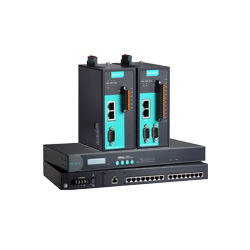
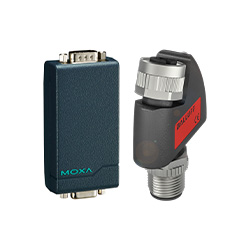
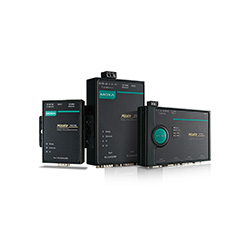
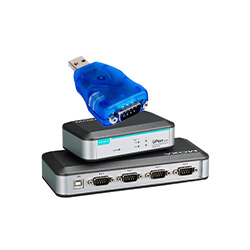
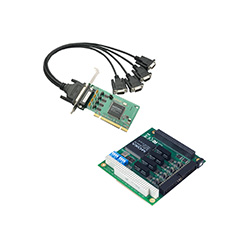
Common devices include serial device servers, protocol gateways, serial converters, and multiport serial boards, depending on the equipment being connected.
6. What is the difference between edge computing and edge connectivity?
Edge connectivity focuses on linking devices and networks together, while edge computing processes data closer to its source before sending it elsewhere.
7. How do I connect Modbus RTU to Ethernet?
A Modbus TCP gateway converts Modbus RTU serial signals into Modbus TCP, allowing the device to communicate over an Ethernet network.
8. What protocols are used in industrial edge networks?
Common protocols include Modbus TCP, Modbus RTU, EtherNet/IP, PROFINET, MQTT, and OPC UA, depending on the equipment and application.